A Rug Size Guide For your Bedroom
Finding the right rug size for your bedroom is less about strict rules and more about creating a layout that feels balanced, cozy, and visually grounded. Below is a simple guide, based on common layouts, typical furniture proportions, and the overall feel people tend to prefer. Use these ideas as starting points and trust what looks right in your space.
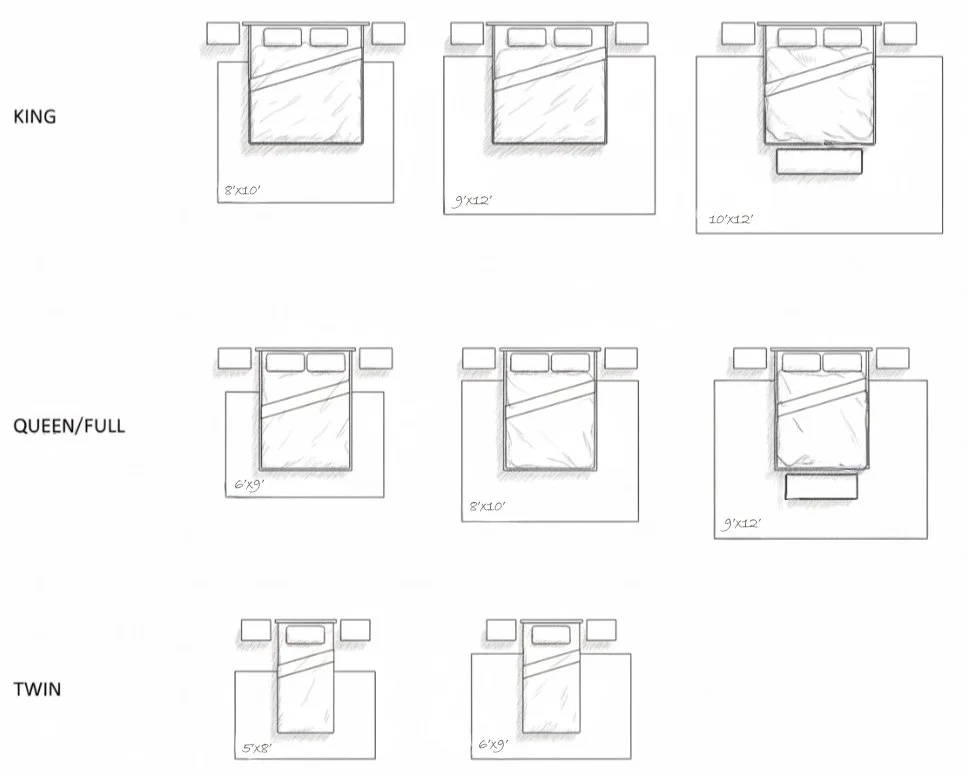
5' × 8' Rug
A 5'×8' rug can work well in smaller rooms or more compact layouts. It usually sits horizontally under the bed, covering the lower third to half of the bed’s length.
Best for small spaces or when you want to keep flooring more visible.
Creates a light, minimal look without overwhelming the room.
Works best with a twin setup.
6' × 9' Rug
A 6'×9' rug is a nicely balanced option for many bedrooms. It offers coverage around the bed without feeling too large.
A popular middle-ground size—big enough to frame the bed visually.
Extends wider on both sides, giving you a soft landing when you get out of bed.
Works well in small to medium-sized rooms.
8' × 10' Rug
An 8'×10' rug is one of the most common sizes because it creates a comfortable, well-proportioned layout in most queen and king bedrooms.
Offers a generous border of rug around the bed.
Creates a warm, grounded feel in the space.
Fits well under queen and king beds, with room to spare on the sides and at the foot.
9' × 12' Rug
A 9'×12' rug gives the room a fuller, more luxurious feel.
Great for larger rooms where you want the rug to anchor the entire sleeping zone.
Provides a wide, soft perimeter around the bed.
When using a rug this size with a queen bed, consider adding a bench or other furniture at the foot of the bed—it helps visually balance the space and makes the layout feel intentional.
10' × 12' Rug
A 10'×12' rug gives a bedroom a spacious, high-end look and works beautifully in big rooms with king beds.
Creates a large, cohesive footprint for the whole furniture grouping.
Allows for wide rug exposure on all sides.
This size pairs especially well with a bench, trunk, or other furniture at the end of the bed to keep the layout visually grounded.
Design Tips to Consider
Use the right underlay size.
Rug underlays should be at least 5" smaller on each side so they stay hidden while still providing support and preventing slipping.Leave breathing room and scale to the space.
Keep 10"–18" of visible floor between the rug and the walls (24" or greater in larger rooms), and maintain a comfortable distance from nightstands—typically 10"+ depending on your coverage style.Extend the rug beyond the bed for comfort.
Aim for the rug to extend about 8" past the sides of a queen and 12" past the sides of a king (or more if preferred). This creates a soft landing and helps the bed feel properly framed.Anchor your furniture, don’t float it.
We like to place at least the front two legs of larger furniture pieces on the rug rather than letting furniture float around it or sit entirely off the rug. This helps the whole arrangement feel connected.Let the rug frame the furniture.
A rug should visually frame the bed and surrounding pieces, not float in the middle of the room with nothing touching it. As rugs get larger, beds can look smaller—so consider adding a bench or ottoman at the foot of the bed to balance the composition.
Above All: Balance
Choose a rug size and placement that feels balanced, comfortable, and true to how you use the space. These guidelines are here to help you visualize what tends to work well—but the best layout is always the one that fits your room, your furniture, and the way you want your bedroom to feel.
Need help?
Designing a space is about more than measurements—it’s about balance, flow, and creating a room that truly reflects you. Our interior design team can help bring it all together.
Ready to get started? Click the button below and let’s begin the conversation.